
Did you know that September 17 is Constitution Day and Citizenship Day? Unlike unofficial celebrations like National Umbrella Day (February 10) and National Doughnut Day (the first Friday in June), Constitution Day and Citizenship Day are established by US law. In fact, educators are “urged to make plans for the proper observance of the day.” How? By “the complete instruction of citizens in their responsibilities and opportunities as citizens.”
We’re not sure what “complete instruction” means. With seven articles, twenty-one sections, and twenty-seven amendments, the US Constitution isn’t short. And much of it is ambiguous or, at least, open to interpretation, and even argument. This can be especially true of some of those amendments, like the first one, which deals with freedom of speech. Where should we draw the line in terms of how and where people can express their opinions, including what they can wear? (Could you get away with this at your school?)

Debating free speech alone could easily take up a whole semester.
As we explain in Fault Lines in the Constitution, though, the articles and sections in the main part of the Constitution are at least as important to learn about as the amendments. You’ve undoubtedly heard about Congress (Article I), which is composed of the House of Representatives and the Senate, and about the presidency (Article II), and the Supreme Court (Article III). These are the three branches of our government.

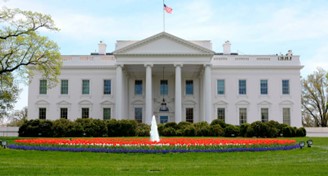
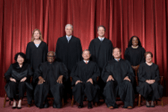
You also might have heard the phrase “separation of powers.” That refers to the ways these three branches share—or tussle over—who has control over governing. In the last couple of years, there has been a lot of debate about who should have more power—the people’s elected representatives in Congress, their president or the courts—because the balance could be shifting. This issue might not sound as exciting as what you’re allowed to wear to school or whether you can protest a rule you don’t like. But who in the federal government makes decisions could have a big impact on your life.
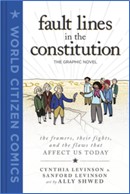
We hope you’ll get some of your “complete instruction” about the Constitution from our book Fault Lines in the Constitution, where we delve into the implications of how our government works—or not. In addition to the book, one of the co-authors’ website has a lot of info, sources, materials, activities, discussion guides, videos, and even games for teachers and kids. You also might want to check out the graphic novel version of Fault Lines.
There are other sites, too, where you can follow the Constitution Day and Citizenship Day law. Some of our top picks include:
- The National Constitution Center
- The Civic Mission of Schools
- The Sandra Day O’Connor Institute for American Democracy
Whether or not you observe Constitution Day and Citizenship Day on September 17, we really hope you’ll keep learning about our government. And, if you’re old enough—VOTE!
 Fault Lines in the Constitution